New Zealand rabbit breed
Intelligent, gentle and outgoing, New Zealand rabbits make great family pets. Learn how to care for, feed and look after your New Zealand rabbit in our guide.
Pet insurance provided by Pinnacle Insurance Ltd.
Information on how we collect and use your personal data is available to read in our Privacy Policy
New Zealand rabbit breed information and advice
Contrary to the name, New Zealand rabbits were bred in California in the early 1900s. Originally, they were mostly red in colour, but when a red roe produced a litter of white kits with red eyes, the new variation became more popular. They’re now often referred to as New Zealand white rabbits, although they do come in other colours.
New Zealand rabbits have dense, soft fur and upright ears. They’re the inspiration behind Easter Bunny depictions, have been used by magicians in magic tricks, and they’re also a chosen breed for medical research.
If you’re considering welcoming a New Zealand rabbit into the family, read on to learn all about this breed and how to care for them.
| New Zealand rabbit facts | |
|---|---|
Lifespan | 7 – 10 years |
How much | £25 – £40 |
Size | Up to 50 cm |
Weight | 4 – 5 kg |
Colours | Red, white, black, blue, mixed |
Grooming | Brush weekly, trim nails every six to eight weeks |
Temperament | Docile, calm, intelligent |
Exercise | Five hours a day to roam and play |
Insurance for your New Zealand rabbit
New Zealand white rabbits are a relatively healthy breed. But that doesn’t mean that they’re immune to health conditions.
Common health problems that can affect New Zealand rabbits include:
Rabbit insurance for your New Zealand rabbit may help towards the cost of vet fees and medical expenses if your bunny is poorly or injured.
How to care for a New Zealand white rabbit
Gentle and docile they may be, but New Zealand rabbits need as much care and attention as any other pet. Find out how to keep your rabbit healthy and happy below.
Feeding and nutrition
A rabbit’s diet should mimic what a rabbit would eat in the wild as closely as possible. That means they should get most of their calories from grass or hay, supplemented by leafy greens, vegetables and pellets to make sure they’re getting the right nutrients.
Fruit and treats should be offered sparingly to avoid your New Zealand rabbit becoming overweight. Make sure your rabbit always has access to fresh water, either from a bowl or a water bottle.
Although many people include salt licks in rabbit cages, your New Zealand white shouldn’t need a salt lick if they’re getting enough nutrition in their diet.
Grooming
New Zealand rabbits have shorter fur than some breeds, meaning they are low maintenance when it comes to grooming. Brushing them once a week should be sufficient, although you might need to do it more frequently when they shed more heavily in spring and autumn.
Exercise
New Zealand rabbits are a larger breed, so they need more space than other domestic rabbits. Most commercial hutches won’t be big enough to allow your rabbit to move around, so you may need to invest in a custom hutch. Your rabbit’s enclosure should be at least four times their stretched-out length to give them space to move freely.
New Zealand rabbits need lots of time outside their hutch, whether in a run or enclosure in the garden, or free roaming in the house. They like to explore, and ideally should have at least five hours a day to roam and play.
Training
New Zealand rabbits are intelligent and can be trained to play games, come when they’re called and use a litter tray. Giving them plenty of mental stimulation will keep your bunny happy and entertained. A treat ball or enrichment items like carboard items filled with hay and pellets will satisfy their foraging instinct.
You should handle your New Zealand rabbit every day to make sure they stay comfortable with human contact. Picking them up, stroking them and spending time with them will strengthen your bond and ensure your rabbit remains gentle and docile.
Temperament and behaviour
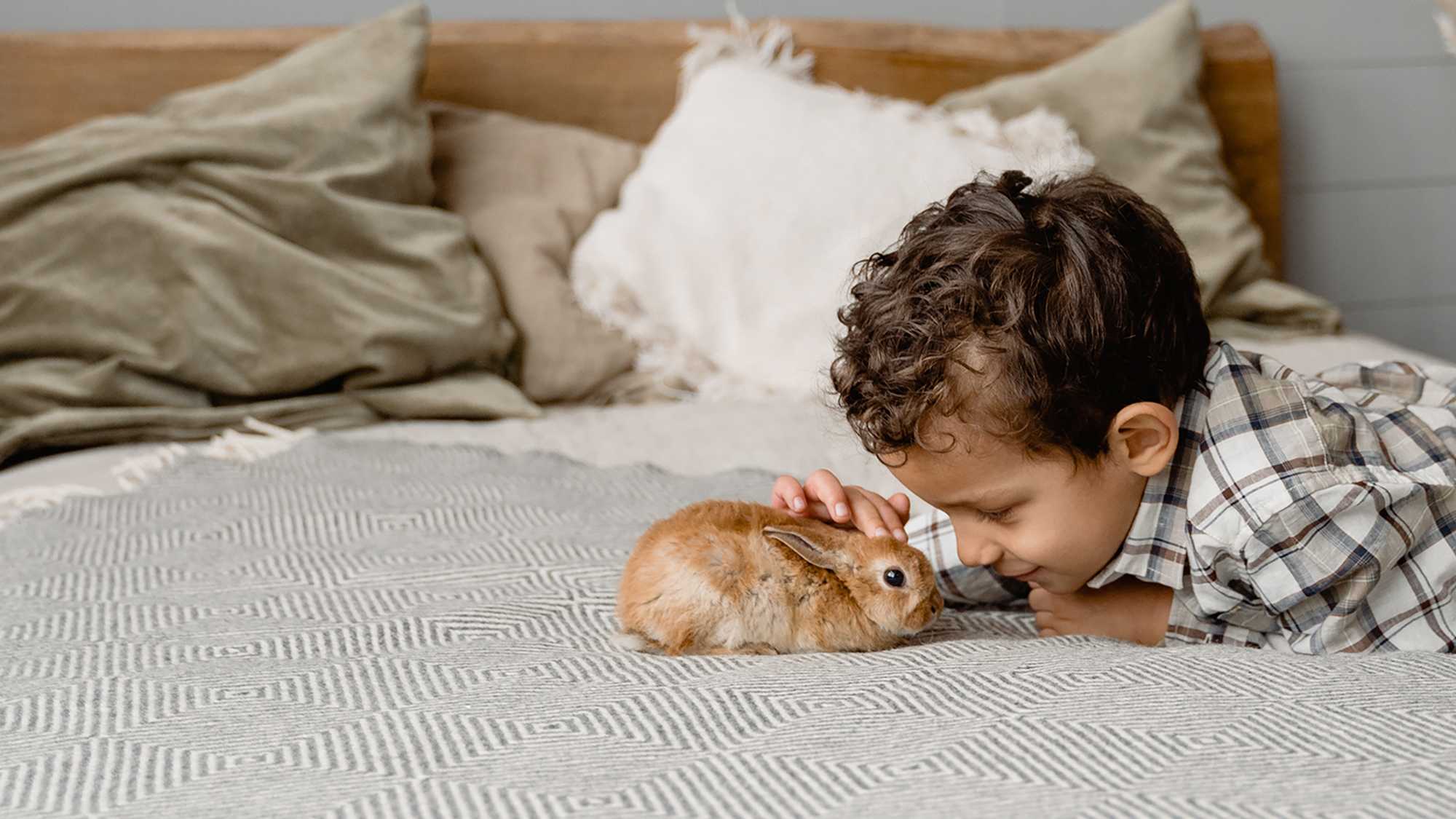
New Zealand rabbits are laidback, gentle and calm. This makes them ideal pets for families with small children and other pets as they are less skittish and nervous than other rabbit breeds. But it’s important to keep loud noises and sudden movements to a minimum to avoid spooking them.
They are sociable creatures and enjoy the company of other rabbits or their humans, so take the time to interact with them every day to avoid a lonely bunny.
So, is a New Zealand rabbit right for you?
Gentle, placid and intelligent, the New Zealand rabbit is a popular pet for families. They are equally happy living indoors or out and have relatively low care needs compared to many other pets.
If you’re looking for a cuddly, low-maintenance pet that the whole family can shower with affection, a New Zealand rabbit might be right for you. Whether you opt for the distinctive white fur and red eyes, or another colour combination, you’re sure to get a friendly and companionable pet.
Frequently asked questions
Are New Zealand rabbits calm?
Yes, New Zealand rabbits are a calm breed compared to a lot of other domesticated rabbits, which can be skittish. It’s for this reason that they were often used in magician shows, as they could be trusted to stay still inside the magician’s hat, or else hidden from view to surprise the audience.
Can New Zealand rabbits live alone?
Rabbits generally are social creatures, and in the wild they live communally in large warrens. Domesticated rabbits can live alone, but it’s important to ensure that they get plenty of socialisation with their humans every day so they’re not lonely. Otherwise, it’s a good idea to keep several rabbits together, as long as they’re neutered.
How big can New Zealand rabbits get?
New Zealand rabbits are a larger rabbit breed and can reach over 5kg in weight. Females tend to be bigger than males, weighing slightly more on average.