Netherland Dwarf rabbit breed
Netherland Dwarf rabbits are petite with an easy-going nature. Learn about the Netherland Dwarf, from their lifespan and size to temperament and exercise needs.
Pet insurance provided by Pinnacle Insurance Ltd.
Information on how we collect and use your personal data is available to read in our Privacy Policy
Netherland Dwarf rabbit breed information and advice
The Netherland Dwarf rabbit is true to its name, bred in Holland from Hermelin rabbits and wild rabbits in the 1900s. They arrived in the UK in the 1940s and became popular breed due to their miniature size.
Netherland Dwarfs are one of the smallest of all rabbit breeds, with a compact body, large head, flat face, short ears and large eyes. They’re categorized as a “true dwarf” – carrying one normal gene and one dwarf gene.
Ready for your own mini Netherland Dwarf rabbit? Discover everything you need to know about this breed before you bring one home.
| Netherland Dwarf facts | |
|---|---|
Lifespan | 10 – 12 years |
How much | £30 – £100 |
Size | 19 – 23 cm |
Weight | 0.9 – 1.1 kg |
Colours | Black, blue-grey, chocolate, lilac, white |
Grooming | Brush weekly |
Temperament | Nervous, lively, intelligent |
Exercise | A minimum of two hours a day |
Insurance for your Netherland Dwarf rabbit
Despite their teeny size, Netherland Dwarfs are full of energy. But they’re delicate and prone to a few health issues. Having rabbit insurance can help to keep your bunny safe and sound, while offering support with treatment and medication costs.
Common health problems that can affect Netherland Dwarf rabbits include:
- Dental malocclusion
- Gastrointestinal stasis (GI)
- Encephalitozoon cuniculi
- Upper respiratory infection (URI)
Like other smaller breeds, Netherland Dwarf bunnies can live up to 12 years, so you can enjoy their company for years to come.
How to care for a Netherland Dwarf
Netherland Dwarfs are relatively low-maintenance and easy to look after. Keep your fluffy friend happy and healthy with the following care tips.
Feeding and nutrition
Your Netherland Dwarf’s diet should consist of fresh hay, supplementary pellets and veggies like kale, spinach and lettuce. This keeps their digestive system healthy and wears down their teeth, helping to avoid dental issues.
Hay should make up at least 70% of your bunny’s diet. Only give them treats like carrots and fruits sparingly, as Netherland Dwarf rabbits are prone to weight gain. Always provide fresh water in a heavy ceramic bowl or sipper bottle.
Grooming
Netherland Dwarf bunnies have a short and sleek coat that is a dream to groom. A weekly brush to remove loose hair and prevent matting should do the job. Rabbits generally moult twice a year, and their coat will need regular grooming.
During shedding season, use a bristled brush and stroke in the general direction of their fur. Don’t forget to clean inside their tiny ears weekly and check for signs of ear mites. You should also trim their nails every month and avoid bathing your bunny as this can be traumatic for them.
Exercise
Netherland Dwarfs need daily exercise to stay healthy. Give them at least two hours of time to roam outside their cage a day, whether it’s around the house or in a secure outdoor space.
This breed can easily get into mischief. Keep them enriched and entertained with safe chew toys, tubes, cardboard boxes and wicker balls. This will get your bunny moving and give you the chance to bond.
Training
Netherland Dwarf rabbits are thought to behave similarly to cats and dogs. This, and the fact they’re very intelligent, makes them easier to train than other bunnies.
With enough time, patience and positive reinforcement, they can be trained to use the litter box and tricks. You can train Netherland rabbits to stand on hind legs, hop over low obstacles, spin in a circle and more.
Temperament and behaviour
Netherland Dwarf rabbits have a ‘wild’ ancestry, but today, they are playful, energetic and slightly timid. They need a bit of time to adapt to their surroundings – after that they become a friendly, energetic bunny.
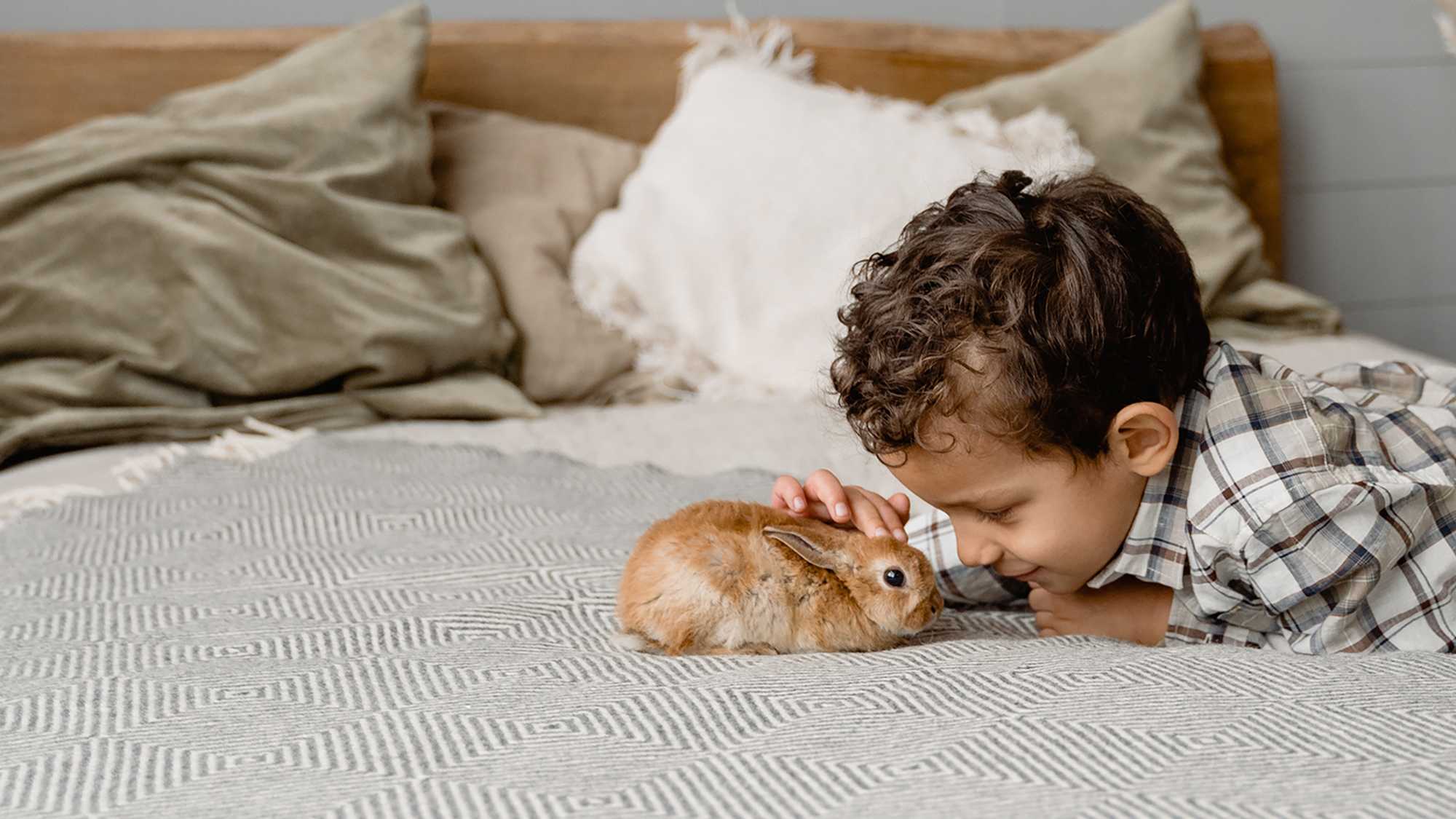
The breed can be known to bite, kick and scratch if handled incorrectly, so early socialisation is important. Ultimately, they coexist peacefully with other bunnies and pets. They also bond with human family members and enjoy a little cuddle – making them affectionate pets.
So, is a Netherland Dwarf right for you?
If you’re looking for a bunny that loves human companionship, then a Netherland Dwarf might be for you. They’re a nervous breed, so don’t expect endless cuddles, and be mindful when handling them.
Netherland Dwarf rabbits are tiny in nature but big in personality. These bunnies are easily trained, love to play and simple to groom. They also have standard dietary requirements. Shower them with enough love, hay and toys and they will be your best friend for years to come.
Frequently asked questions
How long do Netherland Dwarf rabbits live?
The average Netherland Dwarf rabbit lifespan is around 10-12 years on average. Protecting your bunny with rabbit insurance can be the first step to helping them lead happy and healthy lives.
Do Netherland Dwarf rabbits like to be held?
Netherland Dwarf rabbits don’t mind the odd cuddle, but they generally don’t like to be picked up or held. They’re a skittish and nervous breed, so sudden handling can frighten them. Early socialisation can help them get used to being held.
Can Netherland Dwarf rabbits live alone?
Netherland Dwarf rabbits prefer to live with others. Rabbits are social creatures that evolved to live in groups. Without company, your bunny can become bored and unhappy, leading to physical and behavioural issues.