Lionhead rabbit breed
Fluffy and fun-sized, the Lionhead rabbit has a docile and friendly nature. Learn all about Lionhead bunnies, from how to care for them to their lifespan and diet.
Pet insurance provided by Pinnacle Insurance Ltd.
Information on how we collect and use your personal data is available to read in our Privacy Policy
Lionhead rabbit breed information and advice
Sometimes called a Dutch Lop rabbit, the Holland Lop is a small and cute rabbit breed. Energetic, playful, and sometimes skittish, these mini lop-eared rabbits are fantastic family pets that can happily snuggle up in your palms.
Learn more about the Holland Lop and find out if the breed is right for you.
| Labrador facts | |
|---|---|
Lifespan | 7 – 9 years |
How much | £25 – £170 |
Size | 20 – 25 cm |
Weight | 1 – 1.5 kg |
Colours | Black, lilac, blue, chestnut, chocolate, white |
Grooming | Brush mane daily, groom body weekly |
Temperament | Docile, friendly, intelligent |
Exercise | A minimum of four hours daily |
Insurance for your Lionhead rabbit
Lionheads are dinky bunnies with a big personality. But because of their size, they can be delicate and vulnerable to certain health conditions.
Common health problems that can affect Lionhead rabbits include:
- Fly strike
- Spinal injury
- Brachycephalic Syndrome
- Rabbit Haemorrhagic Disease (RHD)
Rabbit insurance can cover the cost of vet bills, medication and treatment, so you can keep your Lionhead bunny hopping and healthy.
How to care for a Lionhead
Lionheads are lovable balls of fluff that love to cuddle and play. But like other bunnies, they need lots of attention and care to help them live a long and happy life.
Feeding and nutrition
Lionheads require high-quality fresh hay and grass for essential fibre and digestive health. They also enjoy fresh veg like celery and lettuce, as well as sweet potato and rabbit pellets.
Contrary to popular belief, you shouldn’t feed your lionhead bunny too many carrots – this can lead to digestive issues such as diarrhoea or bloating. Fruit can also serve as an occasional treat, and can form 5% of a rabbit’s diet.
In addition to hay, Lionheads should always have fresh water to drink. Ensure you check their water bottle or bowl is clean and full every day.
Grooming
Lionhead bunnies are characterised by woolly medium-length fur that requires more grooming than other breeds. You should brush their hair two to three times a week, and daily during moulting in the spring or autumn.
Lionheads can have either a single or double mane. Single-maned Lionheads have fur circling their head when young, but it may reduce with age. A double-mane Lionhead can keep their thick mane for life, which can also extend to their flanks.
As well as their fur, it’s important to check their ears for debris and trim their nails every month.
Exercise
Lionheads may be small, but they’re an energetic breed that need plenty of exercise. Giving them enough space to hop and bounce for a few hours a day can help to burn calories.
If your lion rabbit is kept in a cage, it’s important that it’s big enough for them to fully stretch on their hind legs. They should also have access to an enclosed run with tunnels and solid floor ramps to keep moving. Before taking them out of the cage, make your home rabbit proof and secure enough for them to roam.
Training
Lionheads are intelligent bunnies that respond well to basic training commands. Litter training will be much easier than with other breeds. And with positive reinforcement and rewards, you can train them to fetch toys, jump and even walk (or hop!) on a lead.
Providing your lion-maned rabbit with toys can keep them stimulated and prevent boredom, which can lead to behavioural problems.
Temperament and behaviour
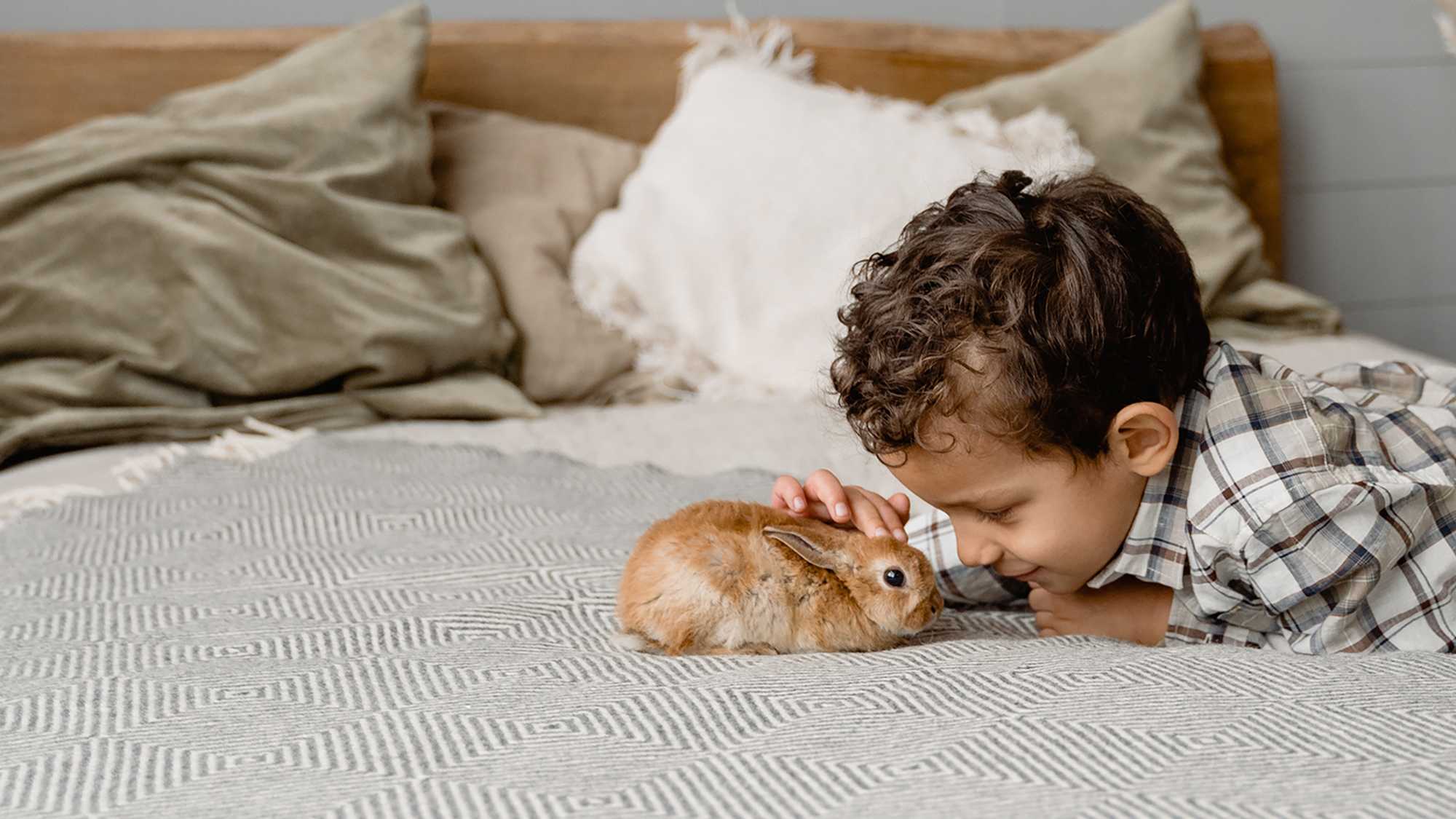
Lionhead rabbits are sweet, friendly and good-natured. They are known to form close bonds with humans and other pets. Outside of their cage, they enjoy playing and cuddling with their family.
Lionheads thrive on companionship, so keeping another bunny can satisfy their social needs. Be careful not to frighten them; Lionheads can be skittish if they feel unsafe or insecure.
Giving your Lionhead bunny plenty of stimulation through toys can keep them busy and alert.
So, is a Lionhead right for you?
Lionheads are bundles of cuteness with great personalities. They’re fairly outgoing, docile and love attention. If you’re looking for a cuddly pet to play and interact with, the Lionhead can be the one for you.
Like other rabbits, they need lots of TLC, including exercise, a balanced diet and toys for enrichment. But Lionhead bunnies need regular grooming to tame that wild mane of theirs. They’re also smaller than your average rabbit, so take extra special care when handling them, and always supervise them with young children.
Frequently asked questions
How long do Lionhead rabbits live?
The average lifespan of a Lionhead rabbit is around 7-9 years. Protecting your little lion bunny with rabbit insurance can be the first step to helping them lead happy, healthy lives.
Do Lionhead rabbits need grooming?
Yes, Lionhead rabbits need grooming more often than other rabbit breeds because of their medium, mane-like fur. Routine brushing is crucial for a Lionhead’s overall health, as it helps to prevent hair and skin issues.
How big does a Lionhead rabbit get?
Lionheads are a dwarf breed, so they’re on the smaller side. A full-grown lionhead rabbit will reach around 20-25 cm long, which is half the size of a standard bunny.