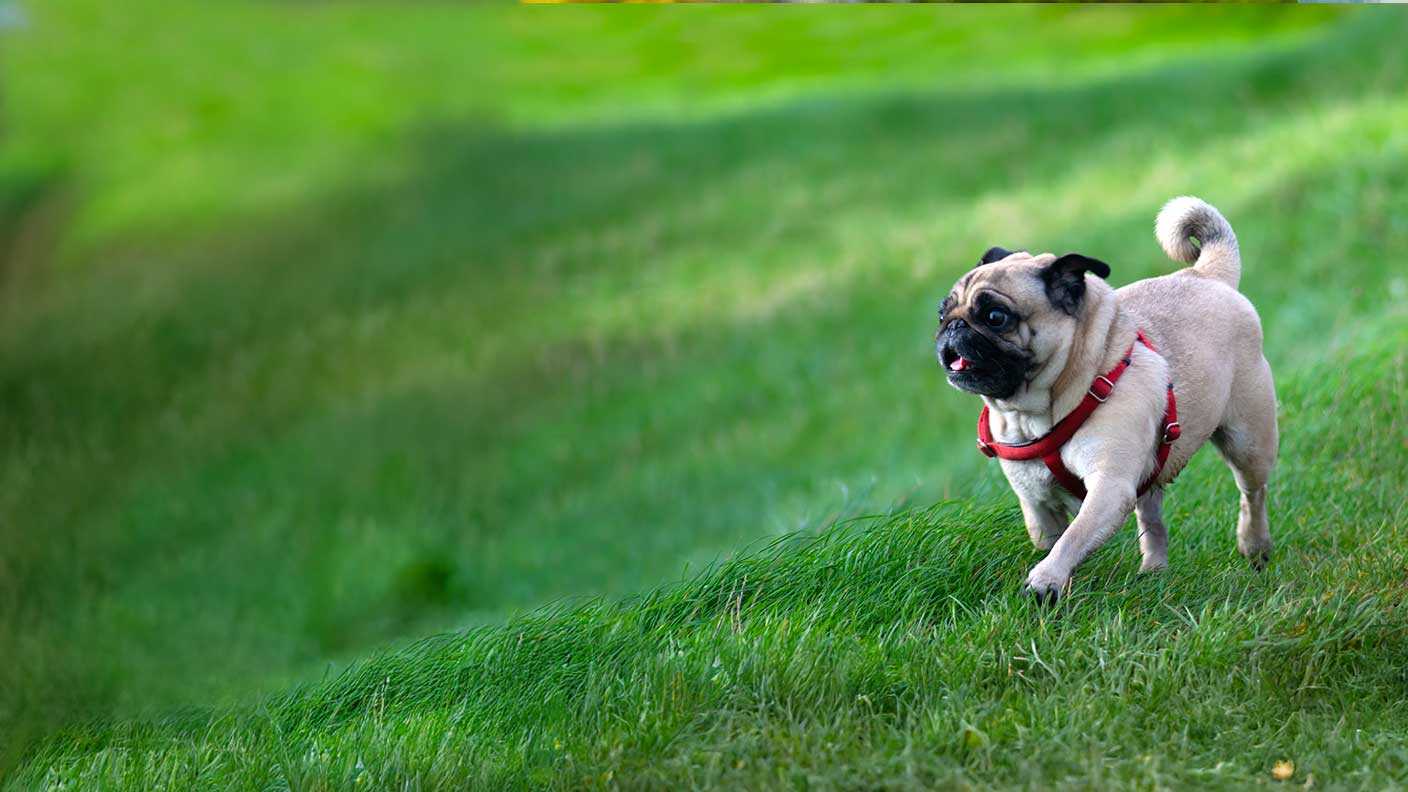
Pug dog breed
Before you take your new bundle of joy home, paws for thought and brush up on your Pug facts.
Pet insurance provided by Pinnacle Insurance Ltd.
Information on how we collect and use your personal data is available to read in our Privacy Policy
Pug dog breed information and advice
Pugs can be a little divisive as a dog breed – there’s those who find them irrepressibly cute and then there’s those who don’t. Either way, you cannot deny these companion pups are an extremely popular breed of dog. But, because of this popularity, over-breeding has caused some serious Pug dog health issues.
If you’re looking to welcome a Pug into your home, make sure you’re buying one from a reputable breeder who is responsible and has the mum and pup’s welfare at heart.
When it comes to taking care of your Pug, our guide has information you need, including information about Pug temperament, exercise requirements and how much it can cost to buy a Pug puppy.
| Pug facts | |
|---|---|
Lifespan | 12 – 15 years |
How much | £500 – £2,000 |
Size | 25 – 36 cm |
Weight | 6.3 – 8.1 kg |
Colours | Black, apricot, fawn, silver fawn |
Grooming | Once a week |
Temperament | Stubborn, friendly, docile, independent |
Exercise | 30 minutes daily |
Insurance for your Pug
As a brachycephalic breed of dog, sadly there are some common health issues that your Pug is likely to develop due to their shorter nose and flatter face.
These Pug health problems include:
- Luxating patella
- Brachycephalic airway obstruction syndrome
- Spine hemivertebra
Pet insurance for your Pug may help cover the costs of vet treatments and any unexpected illnesses or injuries.
As your Pug is prone to developing these conditions at some point in their life, it’s important to consider getting insurance sooner rather than later as most policies will not cover pre-existing illnesses. As with all insurances, policy limits, excesses and exclusions will apply.
How to care for a Pug
It’s not just cuddles that show your Pug puppy how much you care. Along with the best insurance for your pug, you need to make sure you’re on top of your dog’s diet, exercise, grooming and training.
Our Pug care guide will help you to keep your pup in tip-top shape.
Feeding and nutrition
Your breeder will tell you what food they have been feeding your Pug puppy. It’s best to continue with the same type of dog food once you get them home. A quick change in their diet can lead to an upset tummy so, when it comes to changing their food, you’ll need to do it slowly over time. Add a small amount of new food in with the old food, increasing the new and decreasing the old each day. Eventually, you will be left with a bowl of new food.
Beware – Pugs are greedy dogs. You will need to watch what they eat as they can easily become overweight. As Pugs have shortened noses, they are prone to breathing difficulties. So, the more weight they’re carrying, the harder they’ll find it to breathe.
To make sure your dog is eating the correct amount, weigh the food according to the guidelines given on the back of the food packaging. Split this daily amount into two separate meals for morning and evening. This will keep your dog’s hunger satisfied for longer. Also, keep the fatty treats and dinner leftovers to an absolute minimum.
Grooming
Pugs have short fur that needs brushing weekly, and they shed throughout the year. Brushing will help to remove the loose fur. The more you remove, the less there is to stick to your furniture and clothes.
Their coat will never need trimming, but it will need washing monthly. You'll also need to gently clean their facial folds with a damp cloth daily. They will not be able to clean these folds itself and this can cause Pug health problems if left.
Exercise
Pugs are lazy by nature and would happily sleep most of the day. But, as they’re prone to putting on weight, they need their daily exercise. Pugs need at least 30 minutes a day – if this is too much for them in one go, you can split it into two shorter walks. Playing games with your dog is a great form of exercise and gives them the mental and physical stimulation to help keep them fit, healthy and at a healthy weight.
Training
Training your Pug may be difficult. They’re a stubborn breed and will test your patience. But all dogs can learn with time and repetition.
Start by house training your dog. The breeder may have started your Pug puppy’s toilet training, which will make the process easier for you. Give your dog the chance to go to the toilet in the designated toilet area regularly. Give a command such as ‘go for a wee’ and praise your Pug when they go in the right place.
Further training will be easier when toilet training has been mastered. You can take your dog to training classes for tips and support. Pugs respond well to food rewards but be careful they don’t have too many as they tend to have a high fat content.
Temperament and behaviour
Pugs are an independent breed and are happy to entertain themselves, so give them plenty of toys to play with. They rarely show aggression to humans or other dogs and are quick to make doggy friends.
A Pug’s temperament is loving, and they show lots of affection towards their owners.
Pugs may be stubborn at times but they’re generally well behaved.
So, is a Pug right for you?
Most people are drawn to Pugs because of their cute appearance and loving personality. They make great companions and will show you lots of affection.
They may need a little more training than other dog breeds because of their stubbornness, but generally you won’t be disappointed with their behaviour. If you’re looking for a friendly, fun-loving companion to join your family, this may be the breed for you.
Frequently asked questions
What is a Pug?
Pugs are a breed of dog that was originally bred in China to be a companion to nobility and royalty. They also have connections to the Buddhist religion. You may hear the term “Baby Pug”, this is the name given to the toy size of this breed.
How long do Pugs live?
Pugs have a life expectancy of 12-15 years. Health problems and accidents may shorten this lifespan. Keep your dog at a healthy weight by exercising and feeding them the correct diet to reduce the risks of health issues from developing.
Can Pugs swim?
Yes, technically Pugs can swim, but not very well. All dogs have a natural instinct to ‘doggy paddle’ when in water, but a Pug will find it difficult to do so because of the build and shape of their body. Pugs do like water, especially during hot weather. Your dog would benefit from a shallow pool that they can lie down in to help them cool down.
Can Pugs be left alone?
Yes, while some Pugs may never be happy dogs when left on their own, others may be fine for a few hours a day. But separation anxiety is common in Pugs due to their loving and sociable Pug temperament. You should never leave your Pug for over four hours at a time