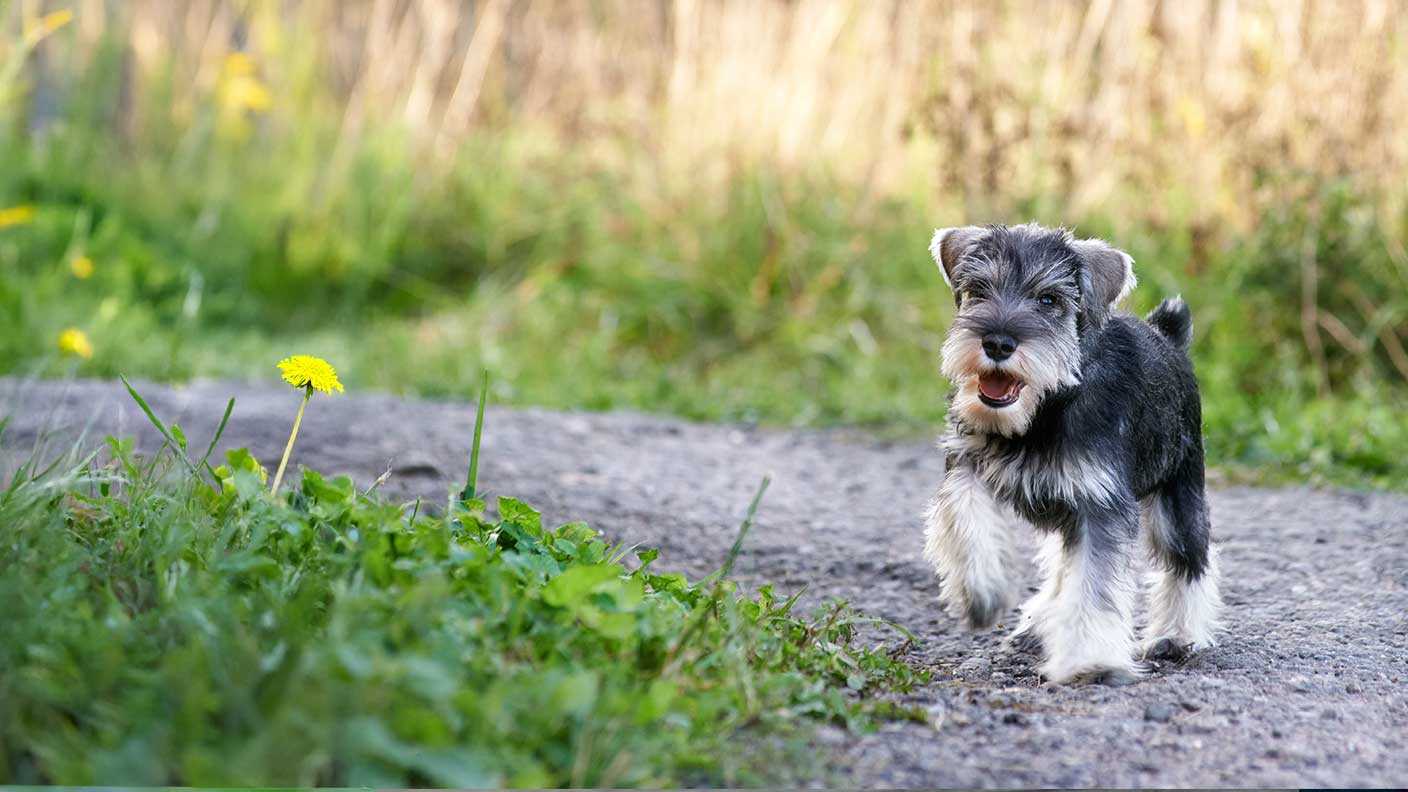
Miniature Schnauzer dog breed
Playful and full of life, Miniature Schnauzers are fun, affectionate and hypoallergenic dogs. Read on for more Miniature Schnauzer facts, like price, lifespan and size. Information and advice.
Pet Insurance provided by Pinnacle Insurance Ltd.
Information on how we collect and use your personal data is available to read in our Privacy Policy
Miniature Schnauzer dog breed information and advice
Originally bred as a working dog on German farms, the Miniature Schnauzer was a result of breeding a standard Schnauzer with smaller breeds including Miniature Poodles , Miniature Pinschers and Affenpinschers. Loved for their characteristic beard and stance, they’re one of the most popular dog breeds across the world.
Is a Miniature Schnauzer right for you? Read our guide to discover information about the mini-Schnauzer breed, including their temperament and personality. We’ll also share tips on how to care for a Miniature Schnauzer, including training, diet, exercise and grooming needs.
| Miniature Schnauzer facts | |
|---|---|
Lifespan | 12 – 15 years |
How much | £650 – £2,000 |
Size | 33 – 35.6 cm |
Weight | 6.4 – 10.1 kg |
Colours | Pepper and salt, pure black, black and silver, white |
Grooming | Once a week |
Temperament | Obedient, fearless, intelligent, friendly |
Exercise | At least an hour a day |
Insurance for your Miniature Schnauzer
No one wants a poorly pet, but unfortunately, illnesses and injuries can happen to any dog at any age. Puppy insurance for your Miniature Schnauzer is important to make sure they’re covered from the get-go.
Regular health checks with your vet will help to spot problems from an early stage. And pet insurance can take away the concern of paying for treatment.
There are some common health conditions that Miniature Schnauzers are more predisposed to, including:
- Cataracts
- Progressive retinal atrophy
- Hyperlipidaemia
How to care for a Miniature Schnauzer
It goes without saying that you’ll need to take your Miniature Schnauzer to the vet regularly to check for any health issues. But you’ll also need to think about day-to-day care for your dog. Here are some tips to help you stick to a routine that will help your mini Schnauzer live a happy and healthy life.
Feeding and nutrition
As a puppy, you should feed a Miniature Schnauzer around 3-4 times a day and gradually move down to 1-2 times a day as they grow. A Miniature Schnauzer will reach full size by the time they are a year old.
An adult dog should weigh between 6.4 - 10.1 kg, depending on their size. To keep your pooch at a healthy weight you should weigh their food using the guidelines on the food packaging. If you’re concerned about your Miniature Schnauzer’s weight, speak to your vet for advice.
Exercise
Miniature Schnauzers need at least an hour of exercise every day to keep them happy and healthy.
They also need mental stimulation to keep their minds occupied. Varying their walks, allowing them time to sniff, training, agility and puzzle games will ensure your dog is content and well behaved.
Training
Miniature Schnauzers are intelligent and obedient dogs who want to please you and receive your praise. This means training them is easy, you can reward your dog with treats or toys to encourage good behaviour. Even house training can be a breeze if you give your dog lots of chances to go to the toilet in the designated area. If you don’t have access to a garden, puppy toilet training can be done using puppy pads.
Teach the basics like sit, stay and loose lead walking while they’re young to help make your Miniature Schnauzer a great companion. Additional training tricks are great to keep your dog mentally stimulated.
Temperament and behaviour
Despite being part of the Terrier group, Miniature Schnauzers are less noisy and feisty than other terriers. They have an extroverted, lively temperament and are good with children and newcomers. They are intelligent and eager to please which makes them quick to learn and easy to train.
However, mini-Schnauzers can be quite vocal, and prone to barking at ‘intruders’ like the postman. They also prefer the company of their family, and don’t like to be left alone for long periods. Their high prey drive means Miniature Schnauzers don’t mix well with smaller pets like cats or rabbits, and they should be kept under close supervision while off lead in public parks.
So, is a Miniature Schnauzer right for you?
Their friendly, lively and obedient personality is suited to most families. You can rest easy knowing a Miniature Schnauzer will be your devoted companion for their entire life. You’ll have no problems with training and their exercise demands are minimal. They’re great with children, so you don’t need to worry about introducing them to your family.
Frequently asked questions
How long do Miniature Schnauzers live for?
A Miniature Schnauzers life expectancy is 12-15 years. Diet, exercise, grooming and training all play a part in your dog’s health and can affect their lifespan. For example, an overweight dog is more likely to suffer from health problems.
What dog group is a Miniature Schnauzer?
This dog breed is part of the Terrier group because it was bred to hunt and kill vermin and guard their families’ home. Miniature Schnauzers have a similar temperament to other dog breeds in the Terrier group. They are obedient, energetic, fearless and spirited.
What is a Miniature Schnauzer?
Miniature Schnauzers were originally bred in Germany to be a ratting dog on farms. They were also used as guard dogs. The Standard Schnauzer was crossbred with smaller breeds, such as Affenpinscher and Poodle, to create this miniature breed. Its small stature meant it was ideal for fitting in smaller spaces where vermin nest.
Can Miniature Schnauzers be left alone?
Miniature Schnauzers prefer the company of their families, but they can be left alone for several hours with the right training. If you plan to leave your dog alone, gradual training to help them get used to being alone is key. Give your dog mental and physical stimulation before you leave them so they can relax at home while you’re gone. Dogs who haven’t learned to be content by themselves may be destructive or exhibit separation anxiety.