Great Dane dog breed
Great Danes are one of the biggest dog breeds in the world – with equally big hearts. Learn about Great Dane characteristics, price, grooming, training tips, and more.
Pet insurance provided by Pinnacle Insurance Ltd.
Information on how we collect and use your personal data is available to read in our Privacy Policy
Great Dane dog breed information and advice
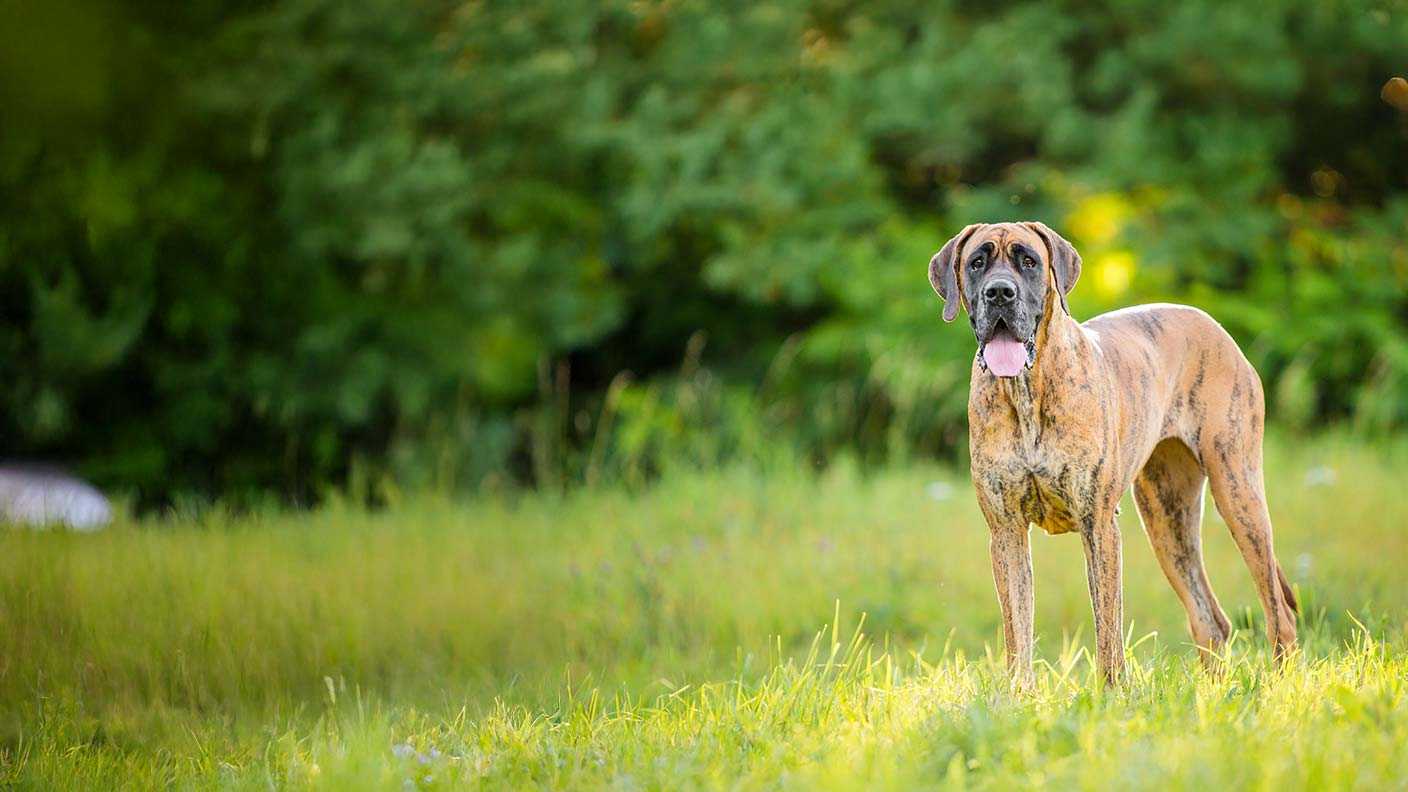
With a tall stature and friendly personality, Great Danes are truly unique dogs. They were originally bred to hunt, but today they make delightful companions with a docile temperament that can steal the hearts of any family.
This dog breed guide will provide you with all the information you need to care for a Great Dane. Find out what they’re like to train, grooming tips, diet requirements and common health issues linked to this breed.
| Great Dane facts | |
|---|---|
Lifespan | 8 – 10 years |
How much | £500– £2,000 |
Size | 70 – 81 cm |
Weight | 45 – 59 kg |
Colours | Black, blue, grey, brown, merle, brindle, fawn, harlequin |
Grooming | Weekly |
Temperament | Gentle, affectionate, friendly |
Exercise | At least two hours a day |
Insurance for your Great Dane
Looking after a Great Dane can be expensive, especially if they need medical treatment. They’re big dogs that will need higher doses of medication and anaesthetic if they become unwell or need surgery. Having dog insurance to cover the costs can be helpful should your Great Dane get ill.
Common health problems that can affect Great Dane dogs include:
- Entropion
- Congestion heart failure (CHF)
- Cervical spondylopathy (wobbler syndrome)
- Gastric dilatation-volvulus (GDV)
How to care for a Great Dane
Well-mannered and friendly, Great Danes are fairly low maintenance compared to other breeds. If you meet their nutritional, exercising, training and grooming needs, your big Dane will live a happy and healthy life.
Feeding and nutrition
It’s true that big dogs need more food than smaller dogs but be careful not to overfeed your Great Dane. This breed is at risk of bloat, so split their food into two, or even three, meals to stop them from eating too much at once. Always weigh food to make sure you’re feeding the correct amount. Feeding guidelines are on the back of food packaging.
Thanks to their big stature, Great Danes require a balanced diet rich in vitamins, nutrients and minerals. Complete dog foods will contain the right amount of nutrients, but you should speak to your vet if you’re unsure.
Grooming
Your Great Dane’s short coat won’t need to be brushed very often as it won’t matt. However, they do shed fur and brushing at least once a week will help to minimise this, as well as keeping the coat and skin clean and healthy.
You’ll need to bath your Great Dane every six to eight weeks. Their size makes them difficult to bath so it may be best to visit a dog groomer.
While Great Danes are low maintenance when it comes to grooming, they are known to drool a lot. Keep their face and mouth clean with regular wiping.
Exercise
Great Danes are strong and energetic, so they need quite a bit of exercise to keep them in good shape. Young Great Danes will need 90 minutes of exercise per day, while older big Danes can enjoy up to two hours of exercise a day.
Whether it’s a brisk walk or a run around the park, Great Danes will thrive outdoors. But be careful to not over-exercise your dog when they are a puppy, as this can affect their joints long term.
Training
Great Danes are easy to train but can have stubborn moments. They have big bodies and can stand their ground when they don’t want to do as they are told. But they are loyal dogs and will want to please you. Clicker training with food as a reward is an effective training method.
Puppy toilet training is easy if you give your puppy lots of chances to go to the toilet. With repetition, your Great Dane will be house trained before you know it.
Temperament and behaviour
The Great Dane became a popular breed thanks to Scooby Doo. This cartoon character portrays Great Danes as clumsy, gentle giants, and this is exactly the kind of behaviour you can expect.
Despite being a big dog, Great Danes are affectionate, gentle and playful. They’re good with other animals, especially if raised with them. They’re also great with children when trained and socialised from an early age, making them the perfect family dogs.
So, is a Great Dane right for you?
The gentle, calm personality of a Great Dane makes them an ideal pet. They’ll happily join a family of pets or be your sole companion. Their strength and size means they will need plenty of exercise and a lot of space to roam free. If you’re looking for a sizeable friend with a big heart, the Great Dane could be a great fit for you.
Frequently asked questions
How long do Great Danes live?
Great Danes have a shorter lifespan than smaller breeds, with a life expectancy of around eight to 10 years.
How tall is a Great Dane?
A fully-grown Great Dane can reach a height of around 81 cm and weigh up to 59 kg. By the time a Great Dane puppy is two months old, it will weigh 8 – 12 kg and be 33 – 45 cm tall. That’s the same size as some adult dog breeds.
What were Great Danes bred for?
Great Danes were bred in Germany to protect property and hunt wild boar. Their height and weight make them powerful dogs that can be dangerous. But they are gentle giants at heart. With training and socialisation, they’re very unlikely show signs of aggression to people or other animals.
How to train a Great Dane
Like all dogs, Great Dane training takes time and patience. Clicker training and food rewards will help, but repetition is key, and it’s important not to overfeed them. Practice commands every day for quick success.