Bengal cat breed
With their wild appearance and infectious personalities, it’s no wonder Bengal cats are so popular. Learn all about their quirks, characteristics, and Bengal cat temperament in this guide.
Pet insurance provided by Pinnacle Insurance Ltd.
Information on how we collect and use your personal data is available to read in our Privacy Policy
Bengal cat breed information and advice
With striking looks, a shimmering luxurious coat and friendly personality, a Bengal cat can make a wonderful addition to your family. But before you make the leap, it’s good to get to know a few things about them.
This cat breed guide has lots of useful information and covers everything from Bengal cat temperament and grooming needs to their lifespan. It also outlines some common ailments and highlights why cat insurance may come in handy.
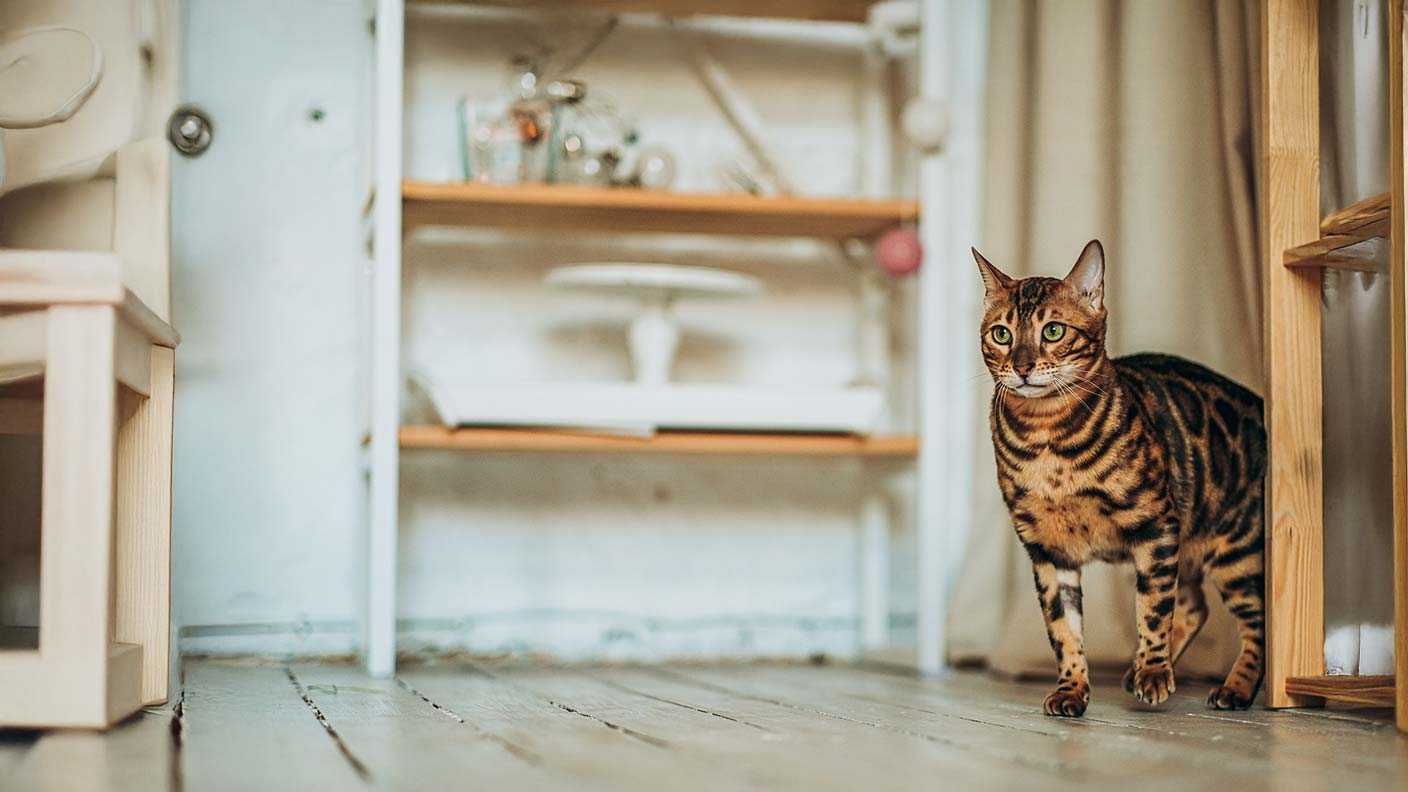
These leopard pet cat lookalikes may appear wild in appearance, but don’t be fooled. These hybrid cats are friendly and sociable and will quickly become part of the family.
| Bengal facts | |
|---|---|
Lifespan | 12 – 16 years |
How much | £300 to £5000 dependng on the sub breed |
Size | 36 - 46cm |
Weight | 3.6 - 7.7kg |
Grooming | weekly brush |
Temperament | active, sociable and intelligent |
Exercise | regular, daily exercise, full of energy and needs room to run around |
The Bengal breed was created by crossing the Asian Leopard cat with the Abyssinian, Burmese and Egyptian Mau breeds. The aim was to introduce the Asian Leopard cat’s immunity to Feline Leukaemia to the domestic cats. Unfortunately, the experiment failed, but these hybrid cats led to the birth of the Bengal cat breed.
Bengal cat insurance
When you’re considering the pros and cons of getting a Bengal cat, don’t forget to factor in cat insurance. Bengals are a robust breed but, as with any pet, they can still get ill. And vet fees can soon mount up.
Bengal cat insurance can help cover the cost of your cat’s treatment, including any medication, vet prescribed complementary treatment or surgery.
Bear in mind that Bengals may be slightly more expensive to insure than the average cat as they are more prone to certain health problems. These include:
- Flat-chested kitten syndrome (FCK)
- Hypertrophic cardiomyopathy (HCM)
- Patellar luxation
- Pyruvate kinase (PK) deficiency
How to care for a Bengal cat
Bengal cats are easy to care for. They’re very clean, and kittens will quickly learn to use a litter tray. But, as with any other cat, make sure that they have a balanced diet and lots of exercise.
The Bengal cat temperament is great for experienced cat owners. They have a distinct, dog-like personality and are very curious. They thrive off enrichment activities that keep them stimulated, such as cat furniture and wand toys.
Feeding and nutrition
Bengals aren’t fussy eaters. They should have a cat food that matches their age, size and activity level. It should also take into account any specific health conditions.
Knowing how much to feed your cat can sometimes be difficult to guage and the amount depends on their age and size. A guide to how much and how often you should feed your cat can be found on the cat food packaging.
Quality cat food can be quite pricey, but cheap brands are likely to contain lower quality ingredients. If you’re unsure what food to go for, speak to your vet. They will be happy to help you and give advice on what’s best for Bengal cat.
Grooming
If you are concerned about how to groom your cat, don’t worry. Although the Bengal breed coat is luxurious, dense and very soft – and can sparkle like glitter – these cats don’t actually need much grooming. A weekly brush with a grooming glove to remove any loose hairs is all they need. They shouldn’t need a bath – but they do love water so might join you in the shower.
Bengals come in a variety of colours and patterns. A brown spotted Bengal cat or rosetted tabbies are the most popular. Their distinctive markings and characteristics are always there - whatever the colour. There are Snow Bengals (with a pale white or cream background), Silver, White and Grey Bengal cats. Most have green, yellow or gold eyes, but Bengals with lynx points have blue eyes and minks have aqua eyes.
Exercise
Bengal cats love to be active and can easily get bored. If kept indoors they’ll need plenty of space for play and exercise. And they’ll need scratching posts, perches to climb and toys to keep them entertained. They also like company, so it’s best not to leave them alone all day.
Letting them outdoors will give these athletic cats room to exercise and give them the mental stimulation they need.
Training
Bengal cats are smart and will quickly pick up litter training. They can also be trained to do tricks and can be taught to play fetch and walk on a lead.
Bengal cat temperament and behaviour
Bengal cats are full of energy and have an adventurous personality. They love playing with water and it’s not unusual to find them drinking from a dripping tap. It’s also best to leave the toilet seat down or you may find your cat in there. They’re very agile but can be clumsy too – it’s a good thing that cats land on their feet.
They’re also very vocal and will let you know whether they’re happy or unhappy. They may look like their wild ancestors, but they’re friendly, affectionate, intelligent and loyal. And once attached to their owner, they’ll be a constant shadow.
They’re good with dogs but can be territorial with other cats if there are lots of cats in the house. They’re also good with children. But, as with any other pet, don’t leave young children alone with your cat.
They enjoy company and don’t like to be left alone all day. They can cause chaos if left alone for a long amount of time. They’ve been known to steal things like pens and pencils, so make sure they have enough cat-friendly toys to play with. And remember that it’s not unheard of for a Bengal to behave erratically every now and again.
What is a Bengal cat?
A Bengal is a large cat with a colour pointed coat and large blue eyes, known for having a placid and affectionate nature. The breed was developed in the US in the 1960s and came to the UK in the 1980s.
Are Tiger cats the same as Bengal cats?
While Tiger cats and the Bengal breed look similar, Tiger cats are actually known as Toyers. The Toyer cat was bred by crossing a Bengal and a stray cat from the streets of India.
Toyer cats have beautiful distinctive markings with stripes on their red, gold and orange coats.
How much is a Bengal cat?
You can expect to pay anything from £300 to £5,000 for a Bengal kitten. The cost depends on the breeder and breeding line. The price might also be higher if the Bengal has a rare or unusual eye colour or coat pattern. They are quite rare and in-demand, which is another reason why they can be quite expensive.
Can Bengal cats go outside?
Bengals love to explore outdoors and are very trusting – which can expose them to danger from other cats and dogs. Their high value can also put them at risk of being stolen.
Fortunately, they adapt well to being kept as indoor cats if they have company and lots of cat toys to keep them occupied. They’ll also need places where they can curl up for a cat nap.
So, is a Bengal right for you?
Bengals can make great companions for elderly owners, single people working from home and families with children. They enjoy company and interaction and will get along with any other pets you might have. They don’t like being left alone, so it would be good to consider getting a feline companion if you’re out at work all day. Bengals love cuddles and are happy to be a lap cat.
Frequently asked questions
Is a Bengal a good family cat?
Yes, the Bengal temperament is loving and loyal so they’ll quickly feel part of the family. They’re affectionate and energetic so make amazing companions for both single households and families.
How long do Bengal cats live?
The average lifespan of a Bengal is between 12 to 16 years, but some can live up to 20 years if well cared for. It takes up to four years for Bengals to become fully mature adults.
Do Bengals make a lot of noise?
Bengal cats are known to be quite noisy and vocal. They are certainly talkative and have a wider range of sounds than other cats. These sounds range from loud to louder!